Understand the event
Timing, water source, rooms involved, and the steps already taken help shape the first conversation.
Frozen-pipe breaks, snowmelt intrusion, roof leaks, and unexpected indoor flooding can affect more than the room where water first appears. Spokane Water Damage Restoration Co. helps property owners move from uncertainty to a sensible plan for extraction, moisture checks, structural drying, cleanup, and preparation for repair work.
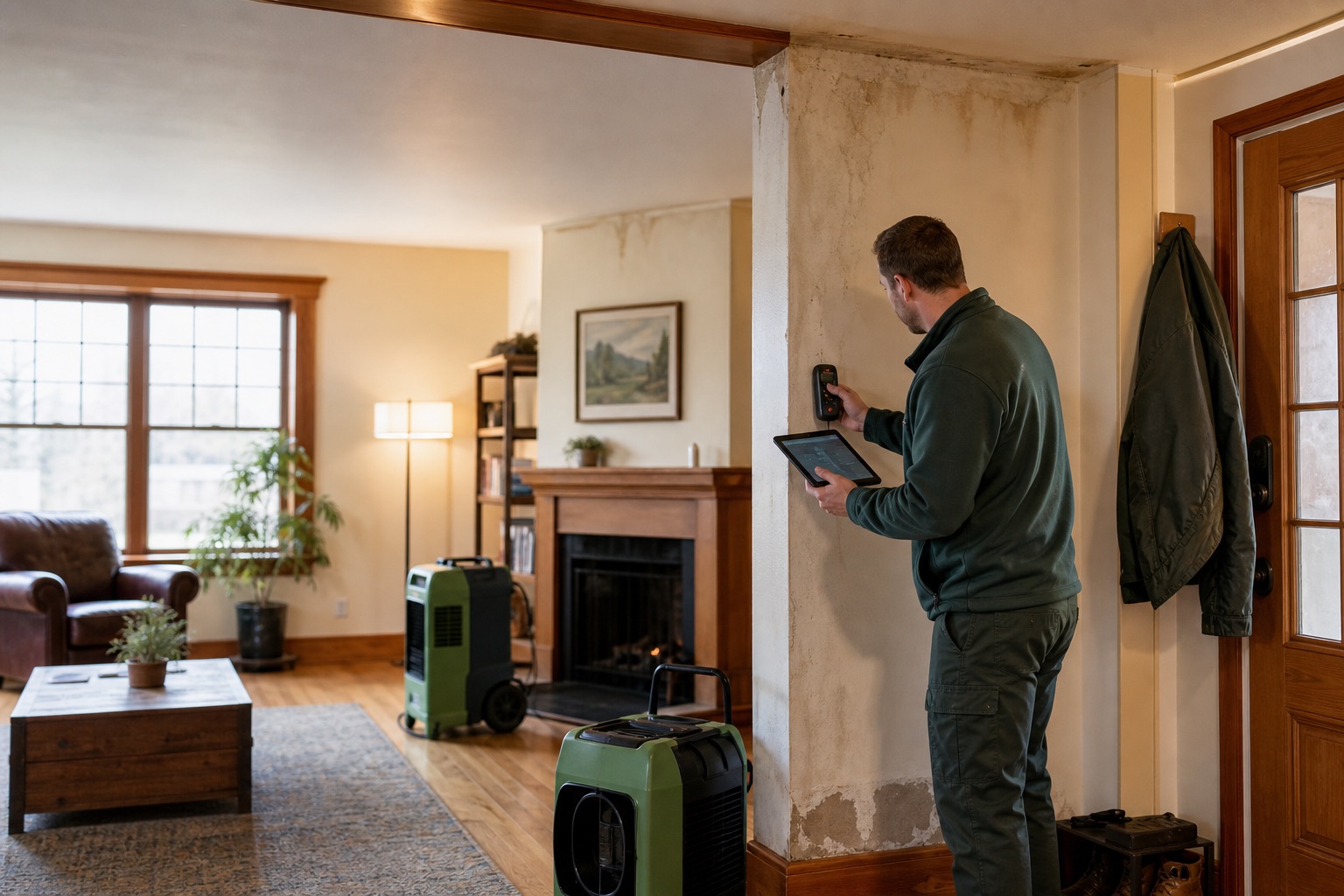
Water follows seams, gravity, absorbent materials, and concealed pathways. A sound response separates the source, removable water, remaining moisture, cleanup, and repair planning instead of treating them as one step.
The work should fit the source, materials, and actual moisture pattern in the property.
Timing, water source, rooms involved, and the steps already taken help shape the first conversation.
Water can follow framing, flooring seams, insulation, and gravity into places that are easy to miss.
Drying and cleanup should leave the property owner with clearer information for any repair work that follows.
When removable water is present, extraction can reduce the load on flooring and structural materials. It should be followed by moisture checks rather than treated as the finish line.
Learn about water extractionStructural drying brings airflow, dehumidification, material knowledge, and ongoing moisture checks together. The goal is a reasoned process based on what is actually wet.
Learn about structural drying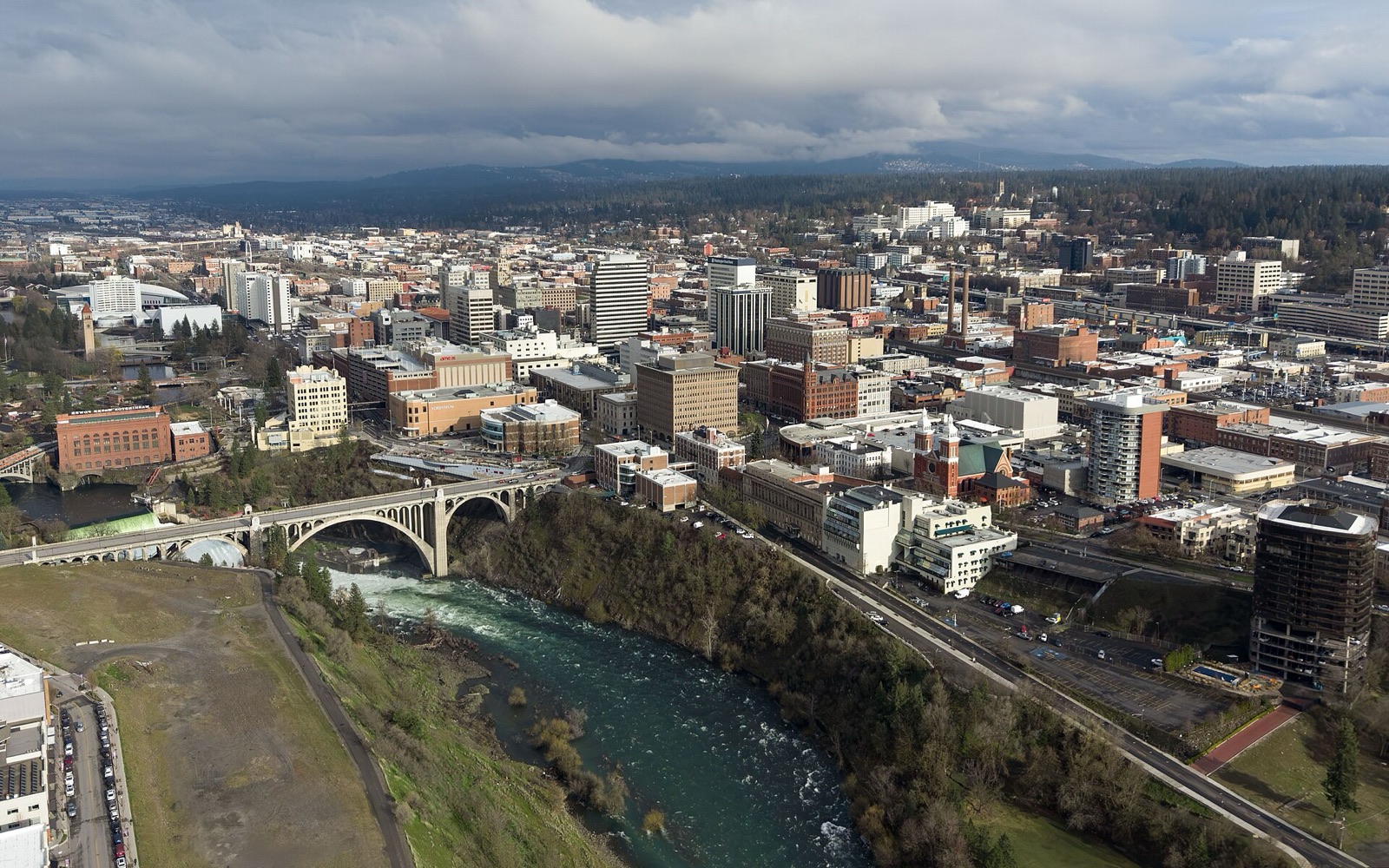
Spokane’s freeze-thaw cycles, winter conditions, snow accumulation, and mix of older and newer homes create distinct water-loss scenarios. The response should reflect the season, the source, and the building assembly.
Protect the property from the full water path
Water can move under flooring, wick into drywall, soak insulation, reach cabinets, and cross into adjoining rooms. Fast extraction matters, but controlled drying and moisture checks are what help prevent avoidable demolition, lingering odors, and mold growth.
Extract standing water from accessible areas so it cannot keep soaking flooring, trim, drywall, and contents.
Check beneath flooring, behind baseboards, inside wall cavities, around cabinets, and in connected rooms for moisture that is easy to miss.
Use air movement, dehumidification, targeted access, and moisture monitoring to dry affected materials—not just the room air.
Clean affected surfaces and address debris or residue based on the water source and the materials involved.
Identify what can reasonably be dried or cleaned and what may need removal before damage spreads or odors settle in.
Move from mitigation into documented repair planning once affected areas have reached appropriate drying goals.
What is at stake
The priority is to stop ongoing damage, remove standing water, locate moisture in connected materials, and dry the structure before avoidable swelling, staining, odor, or microbial growth gets worse.
Locate the source, remove accessible water, and protect belongings or materials that are still at risk.
Inspect the water path in flooring systems, walls, cabinets, ceilings, and adjoining rooms—not only the visible puddle.
Use moisture monitoring to guide drying and material decisions before cleanup turns into repair work.
We work with property insurance claims by helping document the loss with photographs, condition or moisture information, and restoration scope details, and we can coordinate with your insurance adjuster when requested. Coverage, deductibles, and payment decisions remain subject to your policy and carrier.
Property owners throughout Spokane, WA can call for help with assessment, cleanup, documentation, and a practical restoration plan based on the damage found at the property.
Plan the full water-damage response
The important work is the reasoned sequence from the first inspection through repair planning. Ask how each proposed step relates to the source, affected materials, and moisture findings.
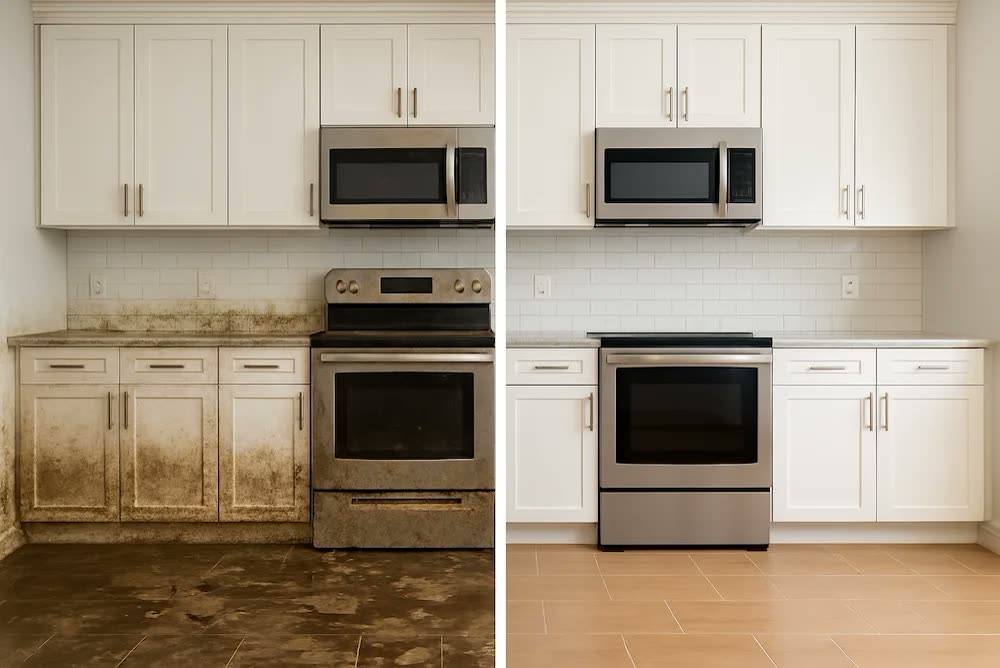
Not every property needs every step. The source, water path, materials, contamination concerns, access, and moisture findings shape the response.
Address accessible water and identify where continued absorption may be occurring.
Consider floors, wall bases, cavities, ceilings, cabinets, insulation, and nearby rooms.
Organize air movement, dehumidification, access, and monitoring around the materials.
Let the source and work area guide cleaning, handling, and safety questions.
Evaluate belongings and building materials separately so each decision has a reason.
Translate the completed drying and cleanup scope into an understandable repair plan.
The strongest response begins with the property story—not a sales slogan. Expect questions about timing, source, affected rooms, material changes, nearby spaces, safety concerns, and work already attempted.
Share when the water was noticed, the likely source, whether the source is stopped, and which rooms or materials appear affected.
No. Water removal addresses accessible water. Drying addresses moisture that remains in materials and the air.
They help define where water traveled and provide useful information for drying and material decisions.
If it is safe, stop or isolate the source, avoid standing water near electricity, and note which rooms and materials changed. Then call and explain the source, timing, and affected area.
Coverage depends on the policy, source, timing, and circumstances. Document the event from safe locations and contact the insurer for policy-specific instructions; this website does not promise a claim outcome.
There is no responsible one-size-fits-all timeline. Material type, moisture levels, access, airflow, humidity, and the extent of the affected area can all influence the drying plan.
Call with the affected location, when the water was noticed, the likely source, and whether the source has been stopped.
Frozen plumbing, roof entry, snowmelt, appliance leaks, sump problems, and summer plumbing failures do not create identical restoration scopes. Describe when the water was found, the likely source, whether the source has stopped, and every room or material that changed. Include lower levels, wall bases, ceilings, cabinets, flooring layers, and stored contents when they connect to the event.
A better first call organizes the decisions in order: safety, source control, water removal, moisture evaluation, drying, cleaning, selective removal, and repair coordination. The actual property determines which steps belong. Ask the company to explain why a proposed step fits and what information will show whether the plan is working.
If the damage involves a finished basement, describe wall coverings, trim, insulation, carpet, resilient flooring, cabinets, and stored contents. If the concern begins at a roof or upper level, mention ceiling changes and every room below the likely entry point. If plumbing or an appliance is involved, explain whether the line or fixture was repaired and whether nearby rooms share the same wall or floor system. These details help the conversation move beyond the obvious puddle.
Property owners can also ask how moisture findings may affect the work boundary, how equipment placement relates to the materials being dried, and what separates the drying phase from reconstruction. No website can diagnose a building, but a well-prepared phone call can make the first real conversation faster, clearer, and more useful.